Guide
Walk-in tub pros and cons
Walk-in tubs help many people bathe safely and comfortably. They also have real drawbacks you should know before you buy.
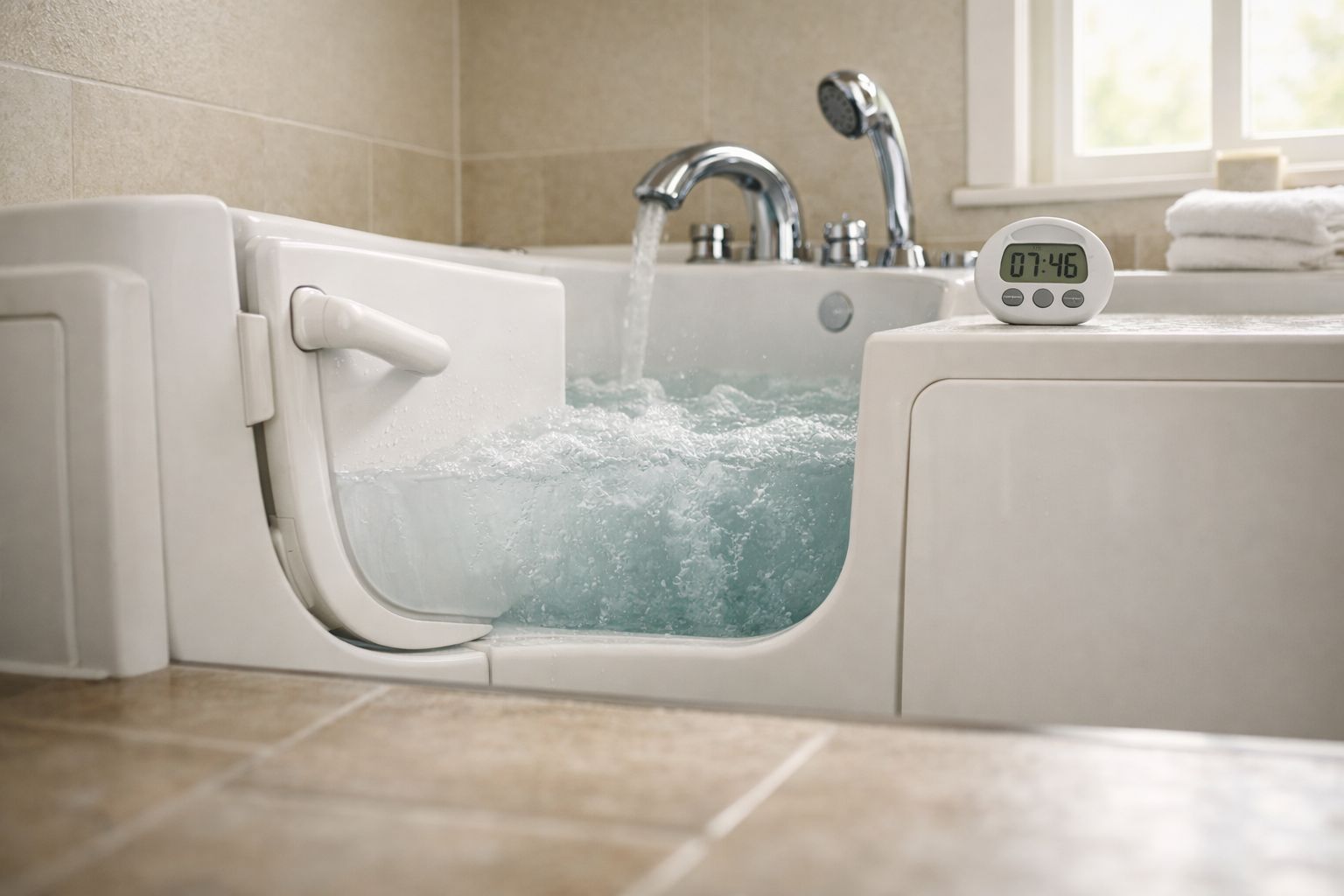
Pros
- Low step-in, often 3 to 6 inches instead of a high tub wall1.
- A built-in seat, so you never lower yourself to the tub floor.
- Deep water that covers your shoulders while seated.
- Optional jets for sore muscles and joints.
- Grab bars and slip-resistant floors built in.
Cons
- Cost: typically $4,000 to $22,1002 installed.
- Waiting: you get in before it fills and stay until it drains. A quick drain helps.
- Hot water: they hold more than a regular tub. A larger heater can cost $600 to $3,1003.
- Hard for caregivers: it's difficult to help someone inside a high-walled tub.
- Resale: some buyers may want a standard tub.
Are they worth it?
For someone who loves a bath but can no longer step over a tub wall safely, many families say yes. For someone who mostly showers or needs bathing help, a walk-in shower usually gives more for less. Compare them in tub vs. shower.
Sources
- Retirement Living, Walk-In Tub Dimensions. Accessed November 10, 2026.
- HomeAdvisor, How Much Does a Walk-In Bathtub Cost? (2025 pricing (no update date shown)). Accessed November 10, 2026.
- HomeGuide, Walk-In Tub Cost. Accessed November 10, 2026.
Every price on this page comes from these sources through our published rate card. We open each source before citing it.